Updated:
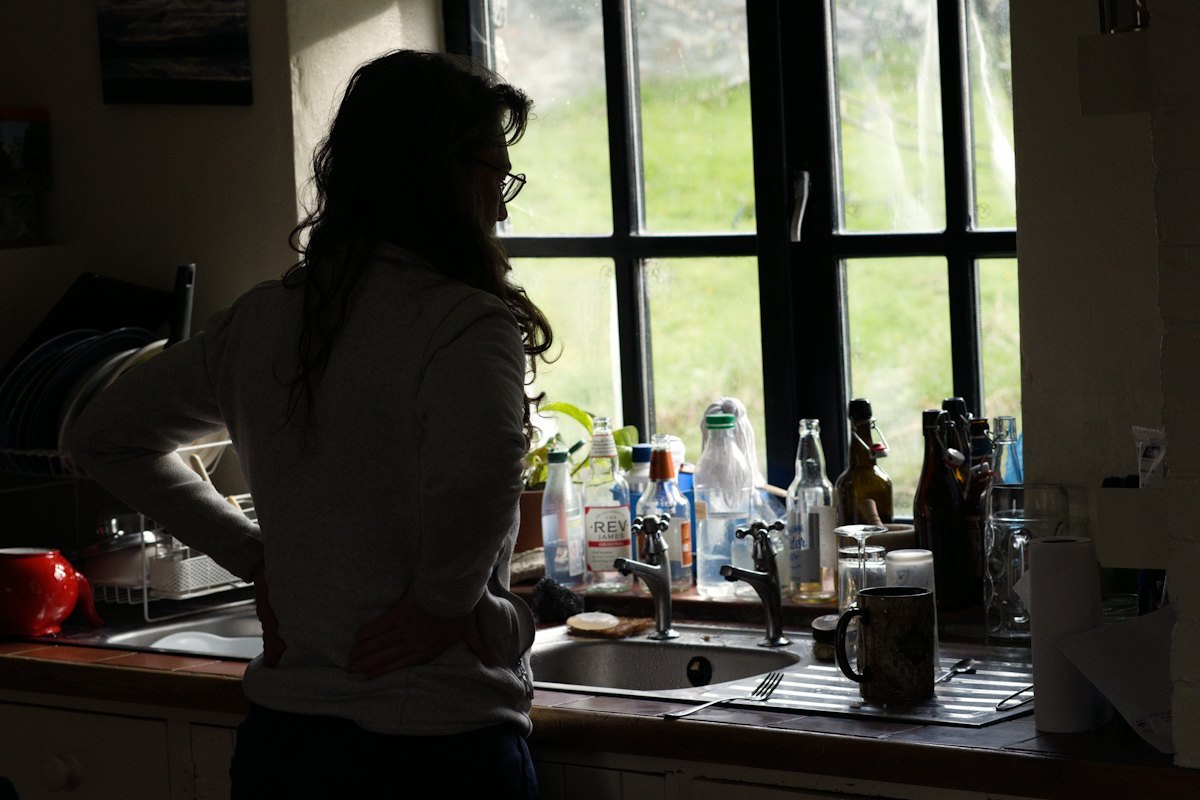
The MRI was clear and the bloodwork was fine. Your doctor, who was doing the job well, told you that everything looks normal. You drove home relieved for about ten minutes, and then you walked into the kitchen and forgot why you were there, for the third time that week.
If that sounds familiar, you are in good company. Most of the people who come to see us in Albuquerque have already had the standard workup, and many of them have started to wonder whether the fog, the short fuse, the 3 a.m. wake-ups, or the slipping focus are something they are imagining. They are describing something a structural scan was never designed to see.
Structure and function are two different questions
An MRI or CT looks at the structure of your brain. It is looking for tumors, bleeds, and visible damage, and it is an excellent tool for that job. What it cannot show is how your brain is working from moment to moment. It is a little like checking an engine block for cracks and calling the car roadworthy without ever turning the key. A brain map turns the key and listens to how the engine runs.
The technical name is a quantitative EEG, or qEEG. Sensors resting on your scalp pick up the small electrical rhythms your brain produces all day long, and software measures how much of each rhythm shows up in each region. Your recording is then compared with a reference database of healthy people your age, so we can see where your brain is running faster, slower, or less flexibly than expected. A clear scan tells you the structure is sound. How the brain is running is a separate question, and it has a separate test.
What happens at a brain map appointment at Brain Body Science
The recording appointment takes about an hour at our office on Academy Road, and it goes in this order:
- We start by talking through your concerns, your history, and what you hope to learn.
- Our EEG technician fits a soft fabric cap on your head and adds a small amount of conductive gel at each sensor.
- You sit still for about ten minutes with your eyes closed and about ten minutes with your eyes open.
- We finish with a few brief heart and nervous system measurements, which take about five minutes.
The sensors only listen. Nothing is sent into your brain and nothing hurts, and most people find the recording easier than they expected. We use BrainCore systems for the recording, and your results are compared against the NeuroGuide reference database.
Preparing is simple. Complete your intake forms before you arrive, come with clean, dry hair and no styling products, and take your usual medications as prescribed. We ask that you avoid alcohol and recreational drugs, including cannabis, for 24 hours beforehand. We clean the gel out before you leave, although a little usually stays behind, so you may want to plan on washing your hair that day. Our preparation guide covers the details.
When you see your results
Your recording is analyzed after you leave, and you come back for a second appointment of about an hour with Dr. Douglas Meints, DC, BCN. He walks you through your map in plain language, connects what it shows to what you have been living with, and answers your questions. You go home with a binder of your results, which many people share with their physician or therapist.
What a brain map can and cannot tell you
A brain map is most useful for patterns tied to attention, memory, brain fog, fatigue, anxiety, mood, and sleep. Many people who come in worried about their memory turn out to have an attention pattern instead, and the map can help tell the two apart.
It also has limits, and you should know them before you book. A brain map does not name a medical or mental health condition, and it does not replace your physician. It shows patterns of function that are weighed alongside your symptoms and history. Some concerns sit outside what it measures, including chronic pain and conditions that begin in deeper parts of the nervous system. It is not a good fit for very young children, for advanced dementia, or for anyone who is coming only because someone else insisted. When a map does not explain what you are feeling, we will tell you that too.
What a brain map costs
The fee is $395 plus tax, and it covers both appointments: the recording and the results review with Dr. Meints. We are a self-pay practice and do not bill insurance. If you decide to continue into neurofeedback training with us, that fee is credited toward your program.
What happens after the map is up to you
Plenty of people come in for the map alone. Some want a baseline to measure against in the years ahead, and some are checking how they are doing after a concussion or a stroke. Others use the map as the starting point for neurofeedback, either in our office or, for people who live outside Albuquerque, on a home training system set up from their own map. Nobody will push you toward a program at your results appointment. For a lot of people, this is the first time anyone has shown them their own data instead of a one-word result, and what you do with it belongs to you.
Finding us
Brain Body Science is at 7801 Academy Road NE, Building 1, Suite 200, Albuquerque, NM 87109. The sign on the outside of our building reads "North Towne 1." Your recording is done by our EEG team, which includes Aubrie Martell, a registered EEG technologist, and your results are reviewed by Dr. Meints, who is board certified in neurofeedback. You can reach us at (505) 418-7018, and our FAQ and brain mapping page answer the most common questions.
Measure first. Train second. In that order, every time.